If you’re new to Nebraska’s system of services for people with intellectual and developmental disabilities, one of the first things you’ll be told is that you need a case manager. But what actually is a case manager? What do they do? How do you get one?
Case managers are your guide through the system. They’re the people who help you understand what services exist, determine what your loved one qualifies for, complete the paperwork, connect you with providers, and ensure services are actually being delivered.
What is a Case Manager?
A case manager — sometimes called a service coordinator — is a professional who works with individuals with IDD and their families to coordinate services, navigate the waiver system, and ensure that the person’s needs are being met. Case managers work through Nebraska’s Department of Health and Human Services (DHHS) Division of Developmental Disabilities or through agencies contracted by DHHS.
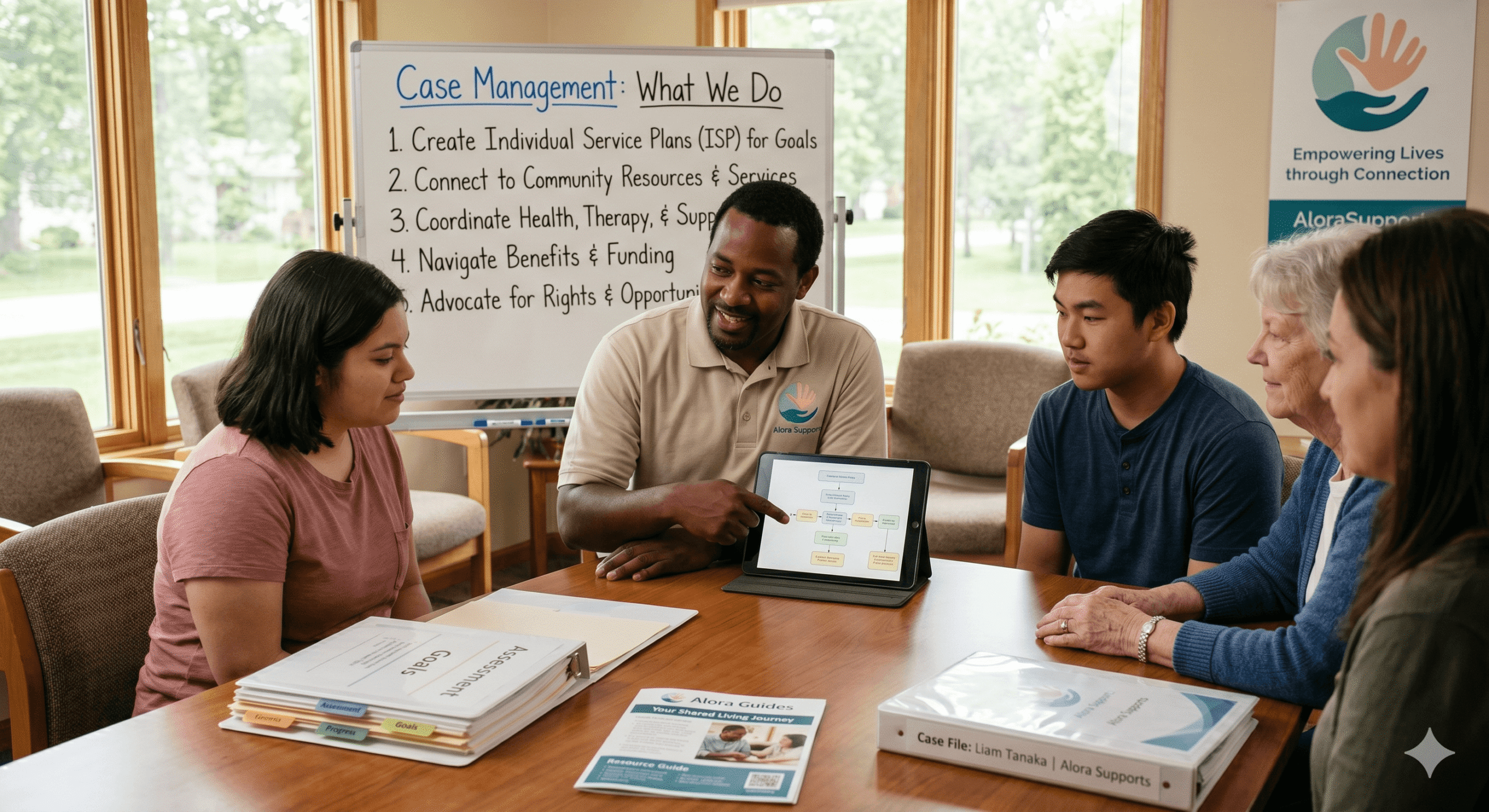
What case managers are responsible for: assessing eligibility for waiver programs; helping families complete waiver applications; coordinating level of care assessments; developing Individual Service Plans (ISPs); authorizing services and determining appropriate service hours; connecting families with provider agencies; monitoring service delivery; conducting annual reviews and reassessments; addressing concerns or problems with services; and advocating for the individual’s needs.
What Case Managers Actually Do Day-to-Day
Assessing Needs and Eligibility: When you first connect with a case manager, they’ll conduct an assessment to understand your loved one’s needs, abilities, and support requirements.
Navigating the Waiver Application: Case managers handle the actual waiver application. They gather required documentation, coordinate level of care assessments, and submit applications to DHHS.
Developing the Individual Service Plan: Once your loved one is approved for a waiver, the case manager works with you to develop an Individual Service Plan. This document outlines what services will be provided, how many hours of each service are authorized, which provider agencies will deliver services, and what goals the services are working toward.
Connecting You With Provider Agencies: Case managers maintain relationships with provider agencies throughout their service area. They can tell you which agencies have good reputations, which ones serve your county, and which ones might be a good fit.
Monitoring Services: Once services begin, case managers are responsible for monitoring to ensure services are being delivered as authorized. They conduct regular check-ins with families and providers and address concerns about quality.
Annual Reviews: Services are reviewed at least annually. Your case manager coordinates these reviews, reassesses your loved one’s needs, updates the ISP based on progress, and reauthorizes services for the coming year.
Problem-Solving and Advocacy: When problems arise, your case manager is supposed to help troubleshoot and find solutions. Good case managers advocate for their clients within the system.
What Case Managers Don’t Do
Case managers don’t provide direct care. They don’t come to your home to help with personal care or take your loved one to appointments. Case managers don’t work for provider agencies. Case managers can’t guarantee immediate service availability. Case managers aren’t therapists or counselors.
How to Get a Case Manager
Contact Nebraska DHHS Division of Developmental Disabilities. Explain that your family member has intellectual or developmental disabilities and you need to access services. A case manager will be assigned based on your county and your loved one’s needs.
What Makes a Good Case Manager?
Responsiveness — they return calls and emails within a reasonable timeframe. Knowledge of the system — they understand the waivers, the services, the regulations, and the local provider landscape. Proactive communication — they check in regularly. Advocacy — they push for services when your loved one needs them. Follow-through — when they say they’ll do something, they do it.
How to Build a Good Relationship With Your Case Manager
Be organized. Keep all your loved one’s paperwork in one place. Communicate clearly about needs. Be specific about what’s working, what’s not, and what you’re hoping to accomplish. Document everything. Keep notes from meetings and save emails.
When to Request a Different Case Manager
Signs it might be time: consistent unresponsiveness; lack of knowledge; no follow-through; dismissiveness; or conflict of interest. Contact the agency or DHHS office that assigned them and explain professionally why the current arrangement isn’t working.
Case Management Across Different Life Stages
During childhood, case management might be minimal if your child is primarily receiving school-based services. During transition (ages 16–21), case management becomes more active as you apply for adult waivers. In early adulthood, case managers help establish adult services and find residential placements. As parents age, case managers help families plan for transitions.
The Bottom Line
Case managers are the navigators of Nebraska’s IDD services system. They’re the people who turn your loved one’s needs into authorized services, who connect you with providers, who advocate within the bureaucracy, and who ensure that services actually happen. Understanding what case managers do and how to work with them effectively helps you make the most of this critical relationship.