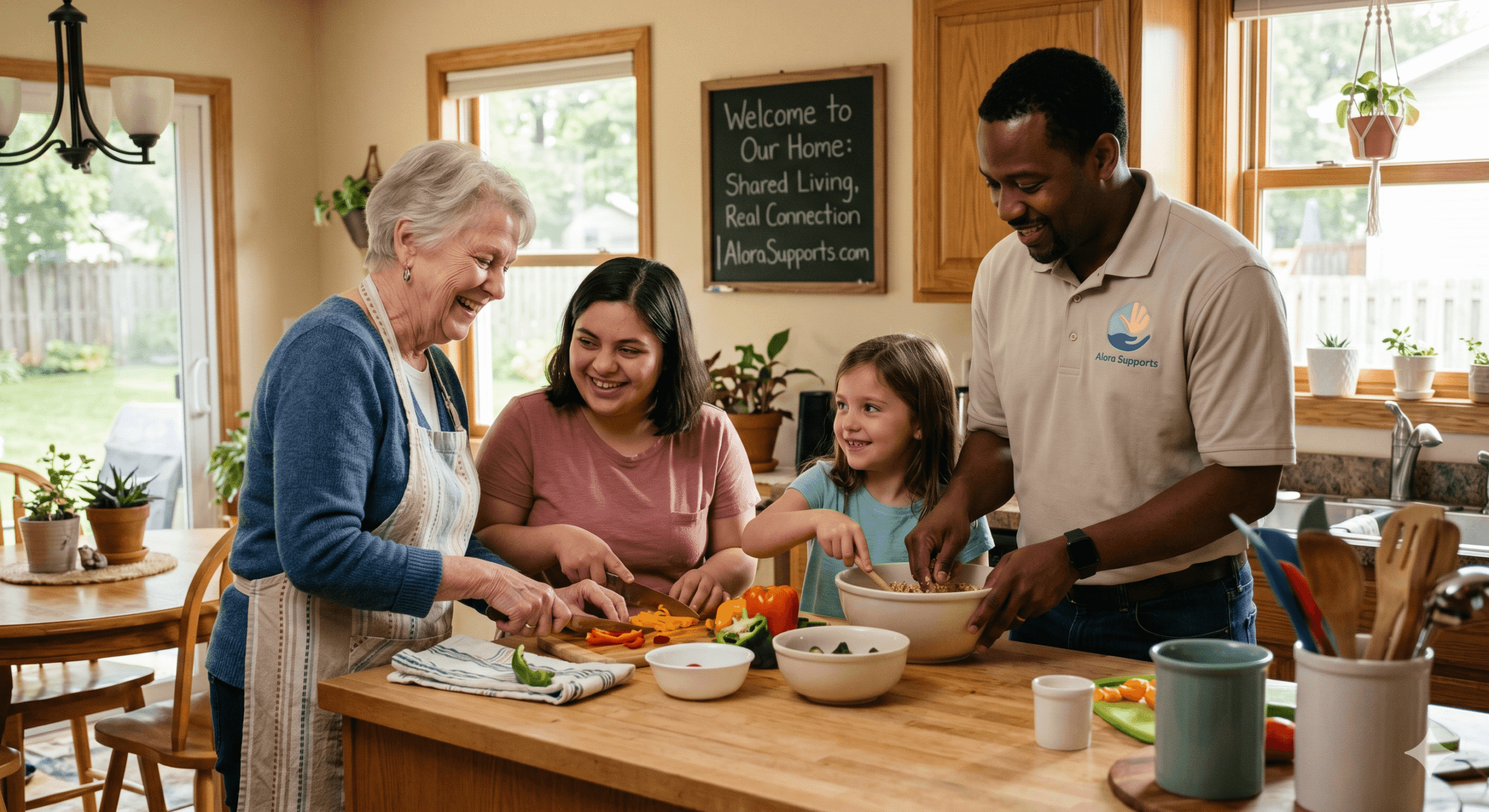
Choosing where your adult child with IDD will live is one of the most significant decisions you’ll make as a parent. When you’re considering shared living — where your loved one moves in with a host family rather than a traditional group home — the decision becomes even more personal because you’re not just choosing a facility. You’re choosing a family.
The right match can create a true home where your loved one thrives, builds meaningful relationships, and lives with dignity and connection. The wrong match can lead to instability, unhappiness, and the disruption of having to move and start over.
What Makes a Good Host Family?
A good host family isn’t just willing to provide care and open their home. They genuinely want to include someone with IDD in their family life, they understand what that commitment involves, they have the capacity to provide the level of support your loved one needs, and they’re a good personality and lifestyle match.
Key qualities to look for: genuine motivation — they’re hosting because they want to make a difference, not just for the income; patience and flexibility; strong communication skills; stability — their household is stable and their home environment is predictable and safe; understanding of IDD; and willingness to include — they’re ready to include your loved one in family meals, activities, holidays, and daily life.
The Provider Agency’s Role in Matching
In Nebraska’s shared living system, approved provider agencies recruit, train, and certify host families, then work to match individuals with appropriate hosts. Good provider agencies match based on compatibility — considering personality, lifestyle, interests, support needs, and family dynamics — not just availability.
Questions to Ask the Provider Agency
How do you recruit and screen host families? What training do host families receive? How many individuals does this host family currently host? What support does the agency provide to host families? What happens if a placement isn’t working? How do you handle concerns or complaints?
Meeting Potential Host Families: What to Look For
During the meeting, pay attention to: how they talk about hosting — do they focus on income or on wanting to make a difference?; their home environment — is it clean, safe, and comfortable?; their communication style — do they listen when you talk about your loved one’s needs?; how they interact with your loved one if they meet; their household dynamics; their understanding of your loved one’s specific needs; and their lifestyle and routines.
Questions to Ask the Host Family
Why do you want to host someone in your home? This question reveals motivation. Have you hosted before, or is this your first placement? What does a typical day look like in your household? How would you include my loved one in your family’s life? What experience do you have with people with IDD or disabilities? How would you handle challenging behaviors or difficult situations? What are your expectations for communication with our family? What happens during vacations or family emergencies?
Red Flags to Watch For
Reluctance to answer questions or defensiveness. Focus on income over care. Unrealistic promises. Lack of involvement from other household members. A chaotic or unsafe home environment. History of frequent placement changes. Unwillingness to communicate regularly.
If you see red flags, don’t ignore them. It’s better to keep looking than to move forward with a placement that has warning signs.
The Trial Period
Many shared living placements begin with a trial period — a few weeks or months where everyone evaluates whether the match is working before making a long-term commitment. Stay closely involved during the trial. Visit regularly, communicate often with the host family and the provider agency.
When the Match Works
When a shared living match works well, you’ll see signs fairly quickly. Your loved one seems comfortable and happy. The host family follows through on what they said they’d do. Communication is open and regular. Your loved one is included in family activities and treated as part of the household.
The Bottom Line
Finding a good host family for shared living isn’t about finding perfect people. It’s about finding the right match — people whose values, lifestyle, communication style, and approach align with your loved one’s needs and your family’s priorities.
When it works, shared living can provide your loved one with a true home, meaningful relationships, and a quality of life that’s hard to achieve in more traditional settings.