Independence looks different for everyone. For some adults with intellectual or developmental disabilities, independence means living completely on their own, managing their own apartment, cooking their own meals, and handling all their daily responsibilities without support. For others, it means being able to get dressed without help, or knowing how to use public transportation, or having the confidence to order food at a restaurant.
Independent Living Services in Nebraska recognizes that independence isn’t one-size-fits-all. It’s a waiver service designed to help individuals with IDD develop the specific skills they need to live as independently as possible — whatever that means for them.
What Are Independent Living Services?
Independent Living Services is a skill-building service available through both Nebraska’s CDD waiver and FSW waiver. It focuses on teaching and practicing the skills needed to live more independently — managing personal care routines, preparing meals, handling money, navigating the community, communicating needs effectively, and making decisions about daily life.
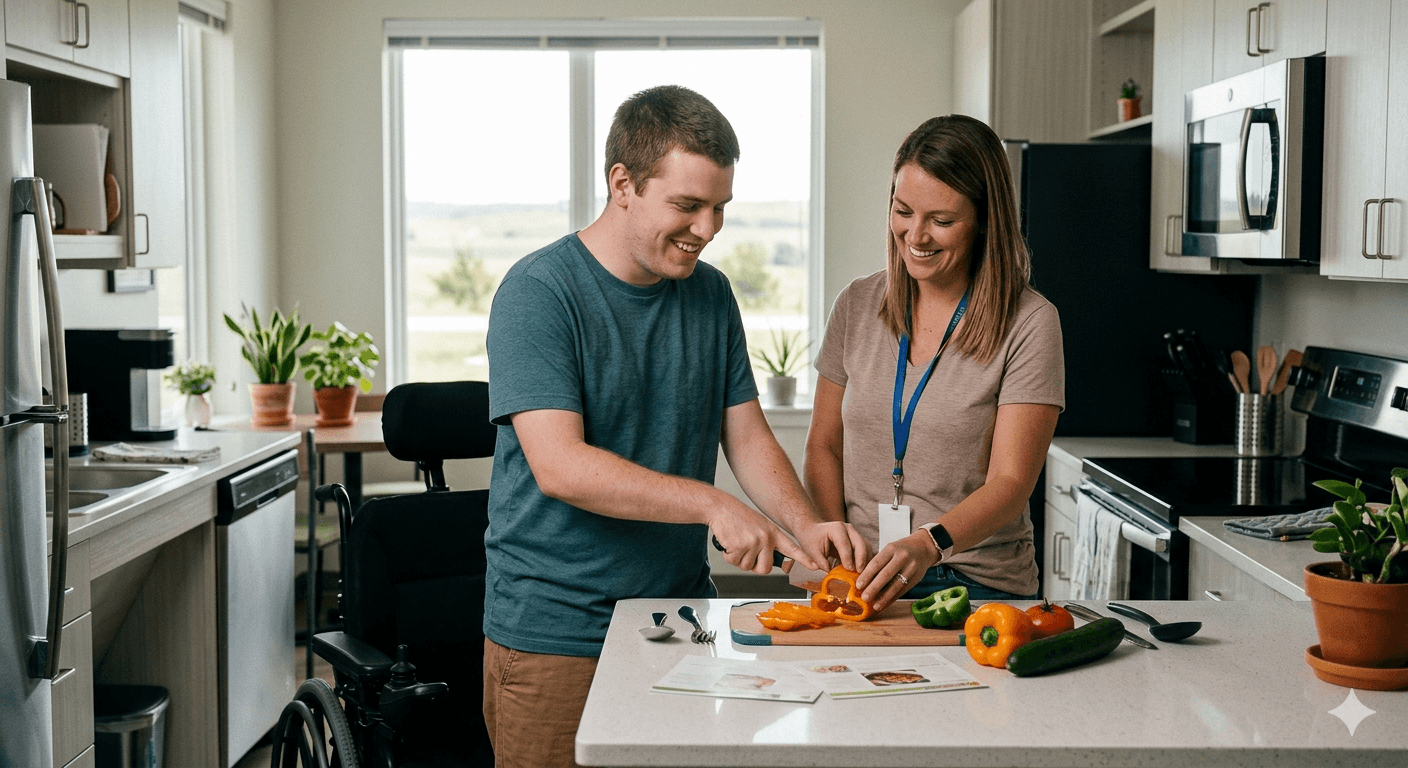
The service is delivered in the person’s own home and community, not in a classroom or facility. The goal is real-world skill development. You’re not learning to cook in a therapy setting — you’re learning to cook in your own kitchen. You’re not practicing budgeting with fake money — you’re managing actual purchases.
What Independent Living Services can include: personal care skills like bathing, grooming, and dressing; meal planning, grocery shopping, and cooking; household management like cleaning and laundry; money management including budgeting and paying bills; transportation skills like using public transit or rideshare apps; communication and self-advocacy skills; safety awareness including emergency procedures; time management and scheduling; and health management like medication routines and making appointments.
Who Can Benefit from Independent Living Services?
Independent Living Services is designed for individuals who have the potential to develop greater independence with coaching and support. That doesn’t mean they have to be capable of complete independence — it means they can learn and grow in specific skill areas.
People who benefit include: young adults transitioning from school who need to develop adult living skills; individuals living with family who want to take on more responsibility for their own care; adults working toward living in their own apartment who need to develop the skills required for that transition; people who’ve been in more structured settings and are ready to build skills for a less restrictive environment; and individuals who simply want more control over their own lives and daily decisions.
How Is Independent Living Different from Supported Family Living?
Independent Living Services focuses specifically on developing the individual’s skills for greater independence. The emphasis is on teaching, practicing, and building capacity so the person can do more for themselves over time.
Supported Family Living is broader — it includes skill-building, but also includes supporting family routines, helping with daily activities, and strengthening the family’s capacity to provide care. Your case manager can help you understand which service or combination best fits your loved one’s situation.
Who Can Provide Independent Living Services?
Like Supported Family Living, Independent Living Services can be provided by family members in many cases, or by qualified staff through an approved provider agency.
Who can provide the service: parents (when the individual is an adult), other family members, and qualified staff employed through a provider agency. The ability for family members to provide Independent Living Services and be compensated for it is significant — if you’re already working with your adult child on cooking skills or teaching them to manage money, you may be able to receive payment for that skilled work through the waiver.
What Does Independent Living Services Look Like in Real Life?
Learning to Cook: A 24-year-old who wants to learn to cook works with a family member twice a week through Independent Living Services on the FSW waiver. They plan simple meals together, make grocery lists, shop for ingredients, and cook step by step. After six months, she can make several meals independently.
Managing Morning Routines: A 19-year-old who recently aged out of school works with a qualified staff member four mornings a week to complete his morning routine more independently — choosing clothes, showering, grooming, and getting ready for his day program.
Budgeting and Money Management: A 28-year-old with SSI and a part-time job struggles with money management. Through Independent Living Services, she works with staff on budgeting, reviewing income and expenses, and practicing purchasing decisions.
How Many Hours Can Be Authorized?
Like most waiver services, the number of hours authorized depends on the individual’s assessed needs and goals. There isn’t a universal hour cap — it’s individualized based on what you’re working toward and how much support is needed to make progress.
Independent Living Services and the FSW Transition Focus
The FSW waiver specifically emphasizes supporting families through transitions, and Independent Living Services is central to that mission. When a young adult ages out of school, they lose structured skill-building that special education provided. Independent Living Services can replace some of that structure and help develop the adult living skills they need.
Can Independent Living Services Lead to Actually Living Independently?
For some people, yes. The skills developed through Independent Living Services can genuinely prepare someone to live on their own or in a more independent setting like supported living.
But that’s not the only measure of success. Even if your loved one will always need some level of support, developing skills still matters enormously. Being able to dress yourself means you’re not waiting for someone else to be available to help you. Knowing how to make a simple meal means you can eat when you’re hungry.
The Bottom Line
Independent Living Services in Nebraska is about helping individuals with IDD develop the skills they need to live as independently as possible given their abilities and goals. It’s flexible, individualized, and focused on real-world skill-building that creates autonomy and dignity. The service is available through both the CDD and FSW waivers, can be provided by family members or qualified staff, and can be tailored to whatever skills matter most for your loved one’s life and goals.