When you’re exploring residential options for an adult with IDD through Nebraska’s CDD waiver, you’ll encounter two terms that sound similar but describe very different living arrangements: Residential Habilitation and Supported Living.
Both are funded through the CDD waiver. Both provide 24/7 support. Both help individuals with IDD live safely in the community. But the experience of each is dramatically different.
What is Residential Habilitation?
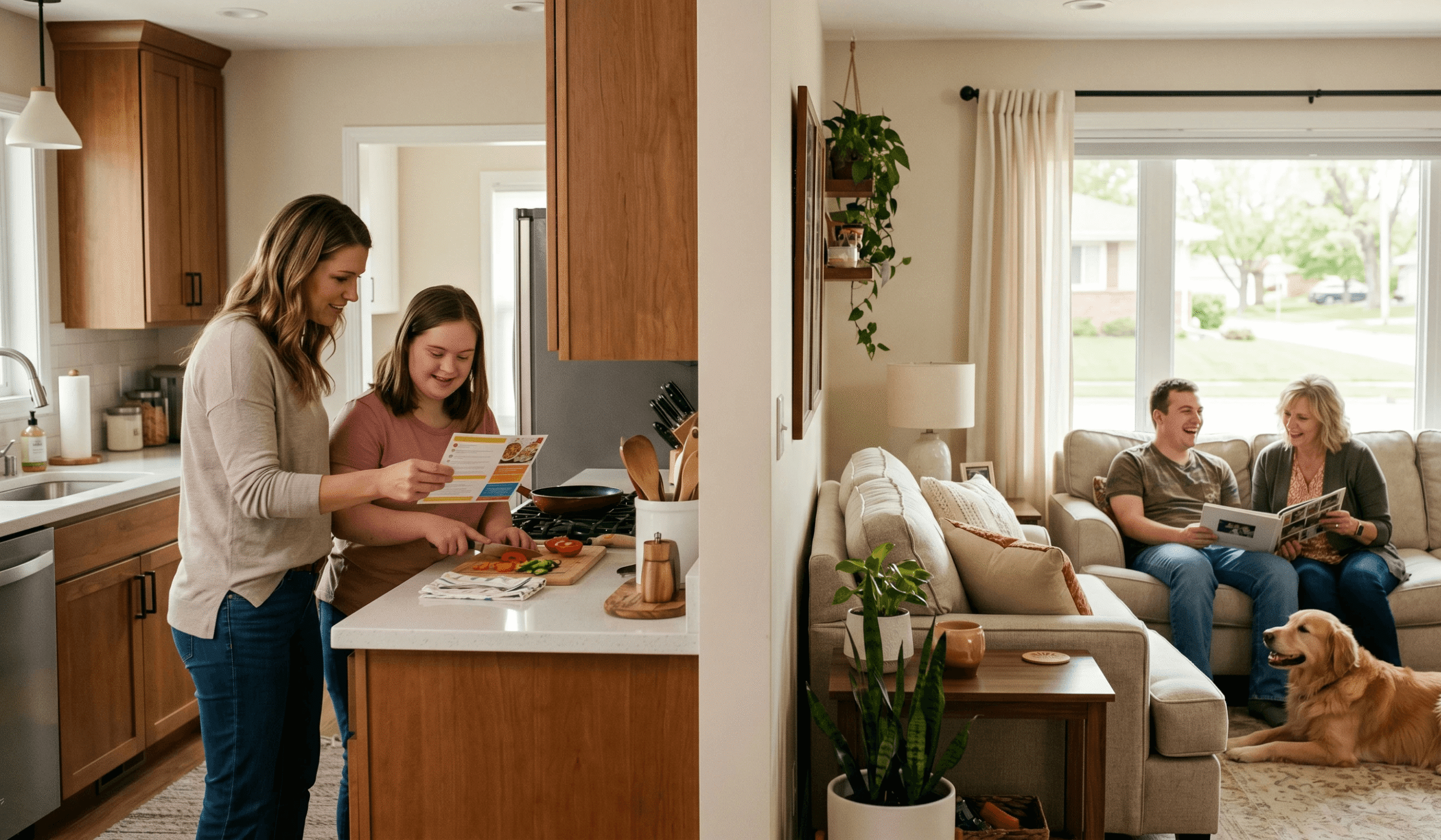
Residential Habilitation is 24/7 support provided in a residential setting where multiple individuals with IDD live together. This includes traditional group homes where several people share a house with staff on-site around the clock, and shared living arrangements where one or two individuals live with a host family.
The defining characteristic of Residential Habilitation is that it’s a congregate or family-style living arrangement. Your loved one isn’t living alone — they’re sharing a home with housemates or a host family.
What Residential Habilitation includes: a place to live with 24/7 supervision; assistance with activities of daily living; support with household tasks; coordination of medical appointments; transportation; staff trained in supporting people with IDD; and socialization and structured activities.
What is Supported Living?
Supported Living is a very different model. Instead of moving into a group setting, the individual lives in their own apartment or home — a place they choose, with their name on the lease. Staff don’t live there. They come in to provide specific supports based on what the individual needs.
What Supported Living includes: the individual has their own apartment or home; staff provide support for specific tasks and routines, but not 24/7 supervision; individuals have control over their own space, schedule, and daily decisions; and more independence and autonomy than Residential Habilitation.
The Key Differences: What Actually Matters
Level of Independence: In Residential Habilitation, independence is limited by the nature of shared living. In Supported Living, the individual has much more control — they decide when to eat, when to go to bed, and how to decorate their space.
Staffing and Supervision: Residential Habilitation provides 24/7 supervision. Supported Living doesn’t provide 24/7 staffing — staff come in for scheduled times. This is critical for individuals who need constant supervision for safety.
Social Environment: In Residential Habilitation, your loved one has built-in social connections. In Supported Living, social connection requires more intentional effort since the person lives alone.
Flexibility and Choice: Residential Habilitation settings have established routines and structures. Supported Living offers much more flexibility.
Who is Residential Habilitation Best For?
Residential Habilitation works well for individuals who need 24/7 supervision for safety or medical reasons, who benefit from structured routines, who thrive in social environments, who need comprehensive support across all areas of daily living, or who aren’t yet ready for the independence of living on their own.
Who is Supported Living Best For?
Supported Living works well for individuals who are capable of being alone safely for periods of time, who can manage basic household tasks with coaching, who want more independence and control, who have strong self-advocacy skills, or who have community connections and social supports outside their living environment.
Can Someone Transition Between the Two?
Yes. If someone starts in Residential Habilitation and develops skills that make Supported Living appropriate, they can transition. Conversely, if someone tries Supported Living and struggles, they can transition to Residential Habilitation.
What About Shared Living?
Shared living is technically a form of Residential Habilitation because it involves living in a shared household with 24/7 support. But it has characteristics that make it feel different from traditional group homes — smaller households, more personalized support, and integration into a family’s life.
The Bottom Line
Residential Habilitation offers 24/7 supervision, comprehensive support, and structured shared living environments. It works well for individuals who need constant support or who thrive in social, structured settings.
Supported Living offers independence, autonomy, and control over one’s own space with staff providing targeted support. It works well for individuals who are capable of significant independence but still need help with specific tasks.
Neither is universally better. The right choice depends on your loved one’s abilities, preferences, support needs, and goals.